
Research publication · TerahertzTerahertz radiation is electromagnetic energy commonly associated with frequencies around 0.1 to 10 THz, between microwaves and infrared, where many materials reveal distinctive propagation, absorption, and imaging behavior. More near-field instrumentation
Near-field wire-based passive probe antenna for the selective detection of the longitudinal electric field at terahertzTerahertz radiation is electromagnetic energy commonly associated with frequencies around 0.1 to 10 THz, between microwaves and infrared, where many materials reveal distinctive propagation, absorption, and imaging behavior. More frequencies
Near-field terahertzTerahertz radiation is electromagnetic energy commonly associated with frequencies around 0.1 to 10 THz, between microwaves and infrared, where many materials reveal distinctive propagation, absorption, and imaging behavior. More microscopy seeks information on a scale smaller than the free-space wavelength. At 0.1 THz, that wavelength is about 3 mm, so ordinary focusing cannot resolve fine structures without a local probe. This paper develops a passive antenna in which a metal wire carries a Sommerfeld surface wave to or from a sharp endpoint. The probe is designed to emphasize the electric-field component parallel to the wire, giving access to longitudinal fields that are normally mixed with transverse components in a far-field measurement. Analytical overlap calculations, full-wave simulations and several experiments are used to establish both emission and collection behavior.
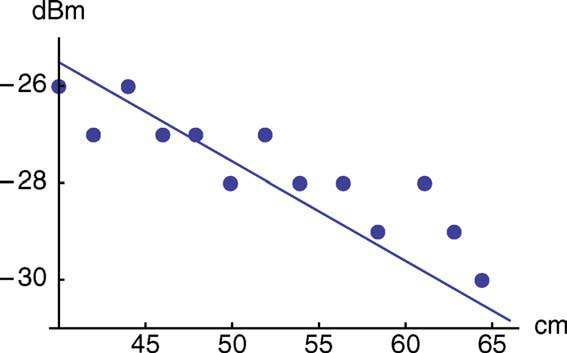
Featured visual: Contextual research figure from âContinuousâwave scanning terahertzTerahertz radiation is electromagnetic energy commonly associated with frequencies around 0.1 to 10 THz, between microwaves and infrared, where many materials reveal distinctive propagation, absorption, and imaging behavior. More nearâfield microscopeâ. It illustrates a closely related terahertzTerahertz radiation is electromagnetic energy commonly associated with frequencies around 0.1 to 10 THz, between microwaves and infrared, where many materials reveal distinctive propagation, absorption, and imaging behavior. More topic and is not a figure from the publication discussed on this page. Source publication.
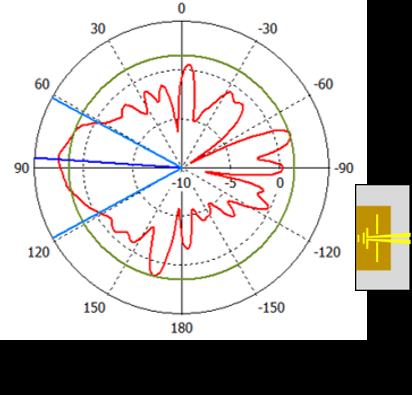
Visuals are drawn from the Airtable research archive. Figure numbering, rights and interpretation should be checked against the original publication before republication outside this site.
A reciprocal wire antenna for local fields
The fundamental Sommerfeld mode of a single metal wire is radially polarized around the conductor and propagates without the cutoff imposed by a hollow metallic waveguide. Its energy is distributed mainly in the air surrounding the wire. Near an open or tapered end, charge conservation produces a strong field component along the wire axis. That localized longitudinal component can act as a subwavelength source; by electromagnetic reciprocity, the same structure can collect a longitudinal field from a sample.
Efficiently launching the mode requires more than placing a wire in a linearly polarized beam. The radial symmetry of the guided field does not match the input polarization. A discontinuous phase element made from PTFE reverses the phase over half of the incident beam. With its step oriented correctly, the modified field has the symmetry needed to overlap the wire mode. The analytical coupling integral predicts a maximum efficiency of approximately 40% when the free-space beam waist is matched to the transverse extent of the guided field. This is an ideal coupling result, not a statement that 40% of source power reaches a sample after all optical, propagation and detection losses.
The experimental antenna used a 12 cm tungsten wire, 0.6 mm in diameter, passing through the centre of a 6 cm diameter PTFE phase plate. A continuous-wave source delivered about 1.5 mW at 0.1 THz. The study examined both a cylindrical termination and a tapered needle with an apex radius near 2 micrometres. The components are passive: the wire guides and concentrates an externally supplied field, while the phase plate performs the free-space-to-wire mode conversion.
Evidence from emission and probe-to-probe coupling
In emission mode, the field leaving the wire end was scanned with a WR10 waveguide connected to a Schottky detector. Measurements of two orthogonal transverse polarizations formed complementary two-lobe patterns whose combination gave an annular intensity distribution. Rotating the measurement plane rotated the pattern, confirming radial rather than fixed linear polarization. A scan in a plane containing the wire axis showed a cone with a semi-angle close to 40 degrees. That angle is much larger than the roughly 8-degree far-field result simulated for a long-wire antenna, indicating that the measured region was dominated by radiation from the final millimetres of the wire and its near-field transition.
Collection was tested by facing two probes toward one another and varying their lateral offset and tip separation. Transmission peaked when the axes were aligned and broadened as separation increased. Finite-difference time-domain calculations at a 0.25 mm gap showed a pronounced axial field near the emitting apex, together with a radial contribution altered by the receiving probe. Comparing measured profiles with overlap models placed the response between the limiting cases of purely longitudinal and purely radial collection. The experiment therefore supports selectivity toward the longitudinal component without claiming perfect rejection of every transverse field.
With sharper 4 cm needle probes, the coupling fell rapidly with tip separation. A slower oscillatory background was attributed to Fabry-Perot interference between the phase plates; subtracting it exposed the expected short-range decay. This distinction is important because it separates local probe interaction from standing-wave artifacts elsewhere in the apparatus.
Imaging longitudinal structure below the wavelength
The most direct test used 2 by 2 mm square apertures cut into a metallic sheet and illuminated from the rear. Simulations predicted that the longitudinal field should be concentrated along the horizontal edges of each opening, whereas transverse components would give different spatial signatures. At a probe height of about 0.25 mm, the measured maps displayed strong responses on those edges and little signal in the aperture centres. Their agreement with the simulated squared longitudinal field supports the interpretation that the wire probe samples the axial component preferentially.
The result does not imply nanometre-scale terahertzTerahertz radiation is electromagnetic energy commonly associated with frequencies around 0.1 to 10 THz, between microwaves and infrared, where many materials reveal distinctive propagation, absorption, and imaging behavior. More imaging merely because a micrometre-scale apex was fabricated. Spatial resolution also depends on probe-sample separation, guided-mode confinement, signal level and background interference. Nor does the paper demonstrate a clinical or production-ready instrument. It establishes a physically selective passive antenna at 0.1 THz and identifies practical paths toward higher-resolution scanning.
The collaboration combined terahertzTerahertz radiation is electromagnetic energy commonly associated with frequencies around 0.1 to 10 THz, between microwaves and infrared, where many materials reveal distinctive propagation, absorption, and imaging behavior. More generation and detection expertise at the Institut d’Electronique du Sud with optical-field and probe design at FEMTO-ST. In the wider THz context, the probe turns radial polarization and Sommerfeld propagation into a measurement function: localizing an axial field that can reveal aperture edges, guided structures or other subwavelength electromagnetic features. That vector sensitivity is as important as raw spatial resolution because it helps relate image contrast to a defined field component.
Bibliographic reference
Recommended citation: Adam, R., Chusseau, L., Grosjean, T., Penarier, A., Guillet, J.-P., & Charraut, D. (2009). Near-field wire-based passive probe antenna for the selective detection of the longitudinal electric field at terahertzTerahertz radiation is electromagnetic energy commonly associated with frequencies around 0.1 to 10 THz, between microwaves and infrared, where many materials reveal distinctive propagation, absorption, and imaging behavior. More frequencies. Journal of Applied Physics, 106(7). https://doi.org/10.1063/1.3236665
Publisher: AIP Publishing. Airtable record: rec7s3ctJj2NydjSr.