
Curved dielectric objects are difficult targets for terahertzTerahertz radiation is electromagnetic energy commonly associated with frequencies around 0.1 to 10 THz, between microwaves and infrared, where many materials reveal distinctive propagation, absorption, and imaging behavior. More imaging. Even when the material itself is weakly absorbing, a large refractive-index discontinuity at the air-sample boundary can redirect the beam, generate multiple temporal peaks and distort phase-based thickness measurements. This paper tests a direct optical remedy: immerse the object in a low-loss liquid whose terahertzTerahertz radiation is electromagnetic energy commonly associated with frequencies around 0.1 to 10 THz, between microwaves and infrared, where many materials reveal distinctive propagation, absorption, and imaging behavior. More refractive index approaches that of the solid.
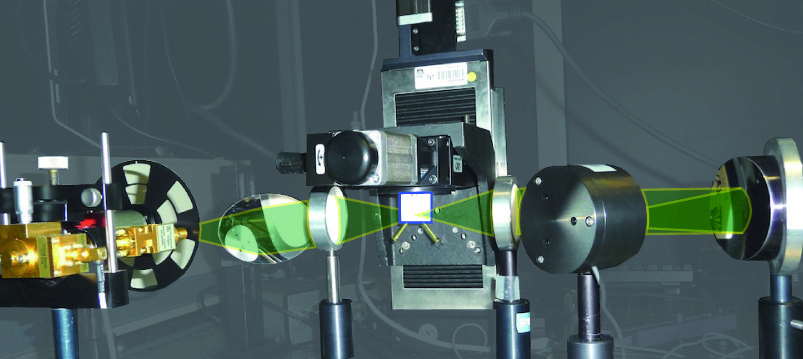
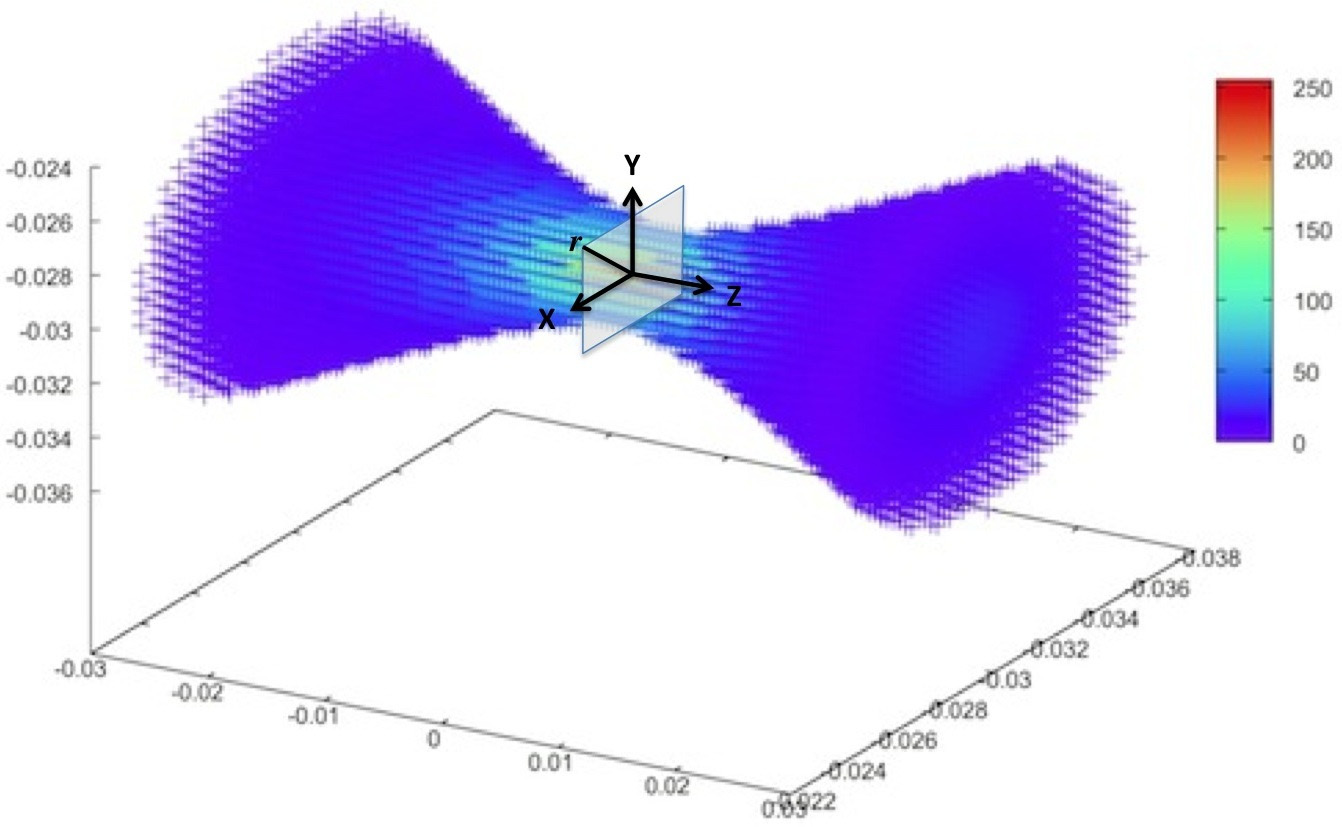
Featured visual: Contextual research figure from âPropagation beam consideration for 3D THz computed tomographyâ. It illustrates a closely related terahertzTerahertz radiation is electromagnetic energy commonly associated with frequencies around 0.1 to 10 THz, between microwaves and infrared, where many materials reveal distinctive propagation, absorption, and imaging behavior. More topic and is not a figure from the publication discussed on this page. Source publication.
Visuals are drawn from the Airtable research archive. Figure numbering, rights and interpretation should be checked against the original publication before republication outside this site.
The interface problem in terahertz imaging
A terahertzTerahertz radiation is electromagnetic energy commonly associated with frequencies around 0.1 to 10 THz, between microwaves and infrared, where many materials reveal distinctive propagation, absorption, and imaging behavior. More time-domain system measures both the amplitude and phase of a transmitted pulse. In a flat sample with parallel faces, those observables can be related to absorption, refractive index and thickness with established models. A prism or cylinder is less forgiving. Snell refraction steers rays away from the detector, Fresnel reflection removes part of the signal, curved boundaries focus or defocus the field, and internal paths can arrive as several peaks. A reconstruction may then attribute propagation artifacts to the object itself.
The authors selected liquid paraffin as an immersion medium because non-polar alkanes combine relatively low terahertzTerahertz radiation is electromagnetic energy commonly associated with frequencies around 0.1 to 10 THz, between microwaves and infrared, where many materials reveal distinctive propagation, absorption, and imaging behavior. More absorption with a refractive index closer to common polymers than air. The liquid and related solid paraffin were characterized by time-domain spectroscopy before imaging. Across the useful band, their dispersion was limited and the extinction coefficient remained low enough for the bath to preserve a measurable transmitted signal. Index matching was not exact, but reducing the discontinuity was expected to suppress the largest angular deviations and reflections.
Two controlled shapes were used: a Teflon cylinder 5.6 mm in diameter and a polyethylene prism with a 10 mm base and a 60-degree angle. Each was imaged first in air and then inside a polyethylene cell filled with liquid paraffin. These reference geometries allowed the researchers to compare recovered profiles with known dimensions rather than judging improvement only from visual appearance.
Measurements, ray tracing and recovered shape
The experiments used a commercial transmission THz-TDS system driven by a mode-locked Ti:sapphire laser with 80 fs pulses at 76 MHz. Pump and probe paths generated and sampled the broadband field with photoconductive devices. The system operated under dry air to suppress atmospheric water lines, with an effective bandwidth of about 0.2-3 THz, a reported dynamic range near 75 dB and spectral resolution around 0.06 THz. Samples were raster-scanned over a 16 by 16 mm area, typically with a 0.5 mm imaging step.
Without the matching liquid, the cylinder produced a bright lens-like feature and poorly defined edges, while the prism redirected the beam strongly. Temporal waveforms contained multiple contributions that made a unique phase delay difficult to identify. After immersion, the transmitted level increased markedly, by more than 40 dB in the reported comparison, and the temporal response was dominated by a cleaner principal pulse. The effective reflection coefficient at the liquid-solid boundary was reported to fall from roughly 0.2 to about 0.02.
Ray-tracing calculations supported the interpretation. Depending on the object, rays that deviated by tens of degrees in air were reduced to deviations of only a few degrees in the matching medium. This did not eliminate finite-beam diffraction or every internal reflection, but it greatly reduced beam steering outside the detector path.
The team then used phase differences between reference and sample measurements to estimate local optical thickness. The prism’s overall slope and shape were recovered, with a frequency-dependent overestimate near 8 percent at lower frequencies in the reported analysis. The cylinder diameter obtained from phase data agreed with the caliper value within about 4 percent. Those figures quantify the improvement for the specific cell, liquids and objects tested; they are not generic accuracy specifications for all immersed THz measurements.
Where index matching can help, and where it cannot
Index matching is valuable because it changes the measurement conditions before reconstruction. An algorithm cannot reliably recover information that never reaches the detector after severe refraction. By preserving a more direct transmitted path, immersion improves both amplitude imaging and phase-based dimensional analysis. The approach is relevant to non-destructive evaluation of compatible polymers, model phantoms and other dielectric objects whose curved surfaces otherwise dominate the signal.
The method also introduces constraints. The object must tolerate contact with the liquid, the bath must remain stable and sufficiently transparent, and the cell boundaries must be calibrated. A liquid suited to polyethylene or Teflon will not necessarily match another polymer. Complex internal interfaces may still generate overlapping echoes, while absorption in a thicker bath can reduce usable bandwidth. These factors make material compatibility and reference measurements essential parts of any applied protocol.
The publication combines spectroscopy, optical modeling, sample handling and tomographic interpretation, indicating collaboration across device and imaging expertise. Its evidence is a controlled laboratory demonstration. It does not claim an established production process or that immersion is appropriate for every industrial or heritage object. In sensitive conservation contexts, for example, contact with a liquid may be unacceptable even if the electromagnetic result is favorable.
The broader lesson extends beyond the chosen paraffin. TerahertzTerahertz radiation is electromagnetic energy commonly associated with frequencies around 0.1 to 10 THz, between microwaves and infrared, where many materials reveal distinctive propagation, absorption, and imaging behavior. More image quality depends on the entire propagation environment. Engineering that environment can be as important as increasing source power or refining reconstruction. When immersion is permissible, a characterized low-loss matching medium can convert a refraction-dominated measurement into one from which thickness and shape can be estimated much more reliably.
Publication details and citation
Recommended citation: Perraud, J. B., Bou Sleiman, J., Recur, B., Balacey, H., Simoens, F., Guillet, J. P., & Mounaix, P. (2016). Liquid index matching for 2D and 3D terahertzTerahertz radiation is electromagnetic energy commonly associated with frequencies around 0.1 to 10 THz, between microwaves and infrared, where many materials reveal distinctive propagation, absorption, and imaging behavior. More imaging. Applied Optics, 55(32), 9185. https://doi.org/10.1364/AO.55.009185
Record ID: recTXB83Ha41gTVTi
Research themes: index matching, THz-TDS, phase imaging, curved dielectric objects, refraction control, dimensional measurement.