
Research publication · TerahertzTerahertz radiation is electromagnetic energy commonly associated with frequencies around 0.1 to 10 THz, between microwaves and infrared, where many materials reveal distinctive propagation, absorption, and imaging behavior. More beam engineering
Linear to radial polarization conversion in the THz domain using a passive system
Most terahertzTerahertz radiation is electromagnetic energy commonly associated with frequencies around 0.1 to 10 THz, between microwaves and infrared, where many materials reveal distinctive propagation, absorption, and imaging behavior. More sources naturally deliver a linearly polarized beam. That familiar field is useful, but it is not always the best match for a circular waveguide, a sharp probe or an optical element designed to create a strong electric field along the propagation axis. This study addresses that mismatch with a fully passive converter. Its purpose is not to generate more terahertzTerahertz radiation is electromagnetic energy commonly associated with frequencies around 0.1 to 10 THz, between microwaves and infrared, where many materials reveal distinctive propagation, absorption, and imaging behavior. More power, but to reorganize the available field into a radially polarized mode whose electric vectors point outward around a dark central axis. The work combines modal analysis, numerical simulation, mechanical design and an experiment at 0.1 THz to show how a conventional continuous-wave beam can be transformed without modifying the source itself.
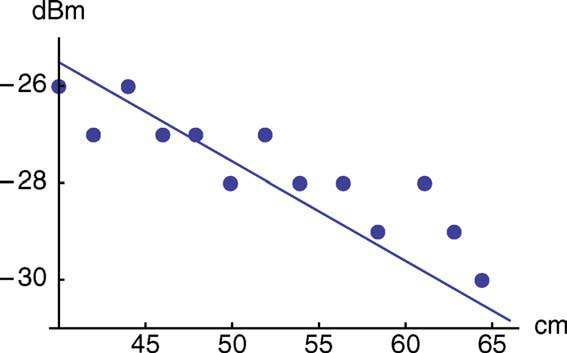
Featured visual: Contextual research figure from âContinuousâwave scanning terahertzTerahertz radiation is electromagnetic energy commonly associated with frequencies around 0.1 to 10 THz, between microwaves and infrared, where many materials reveal distinctive propagation, absorption, and imaging behavior. More nearâfield microscopeâ. It illustrates a closely related terahertzTerahertz radiation is electromagnetic energy commonly associated with frequencies around 0.1 to 10 THz, between microwaves and infrared, where many materials reveal distinctive propagation, absorption, and imaging behavior. More topic and is not a figure from the publication discussed on this page. Source publication.
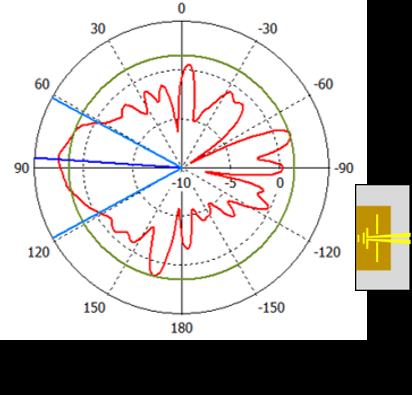
Visuals are drawn from the Airtable research archive. Figure numbering, rights and interpretation should be checked against the original publication before republication outside this site.
Why radial polarization matters at terahertz frequencies
A radially polarized beam has cylindrical symmetry and an annular intensity profile. When it is tightly focused, it can produce a substantial longitudinal electric-field component that is difficult to obtain from an ordinary linearly polarized Gaussian beam. This property is attractive for coupling energy to wire-guided modes, exciting structures with rotational symmetry and feeding near-field probes. In the terahertzTerahertz radiation is electromagnetic energy commonly associated with frequencies around 0.1 to 10 THz, between microwaves and infrared, where many materials reveal distinctive propagation, absorption, and imaging behavior. More range, however, polarization-control components were comparatively scarce when this work was carried out. Approaches tied to a particular emitter or active optical process could not simply be inserted into any existing continuous-wave instrument.
The authors therefore adapted a mode-selection concept to a hollow circular metallic waveguide. Such a guide supports a linearly polarized fundamental TE11 mode and, above its cutoff, a TM01 mode with the desired radial electric-field distribution. It can also support the unwanted TE21 family. The central design problem is consequently precise: transfer part of the incident linear field into TM01, then prevent the competing modes from reaching the output. At terahertzTerahertz radiation is electromagnetic energy commonly associated with frequencies around 0.1 to 10 THz, between microwaves and infrared, where many materials reveal distinctive propagation, absorption, and imaging behavior. More wavelengths, metals can be treated as very good conductors for this purpose because their skin depth is small compared with the dimensions of the guide.
A discontinuous phase element provides the first step. The element reverses the phase over half of the beam, creating the antisymmetry needed to couple a linear input into a combination containing TM01. Calculated overlap integrals show that applying this reversal to the guided TE11 field can place as much as 44% of the power in TM01, compared with 28% for the alternative input configuration considered in the paper. The conversion is not complete because the phase operation also excites TE21. A tapered section then acts as a modal filter: its narrow diameter is chosen above the cutoff of TM01 but below that of TE21, so the radial mode propagates while the unwanted mode is reflected.
From modal calculations to a 0.1 THz prototype
Body-of-revolution finite-difference time-domain calculations were used to evaluate transmission through the taper and radiation from the output. The simulations indicated that TM01 transmission through the filtering taper could approach 90% for the selected geometry. Combining phase conversion and modal filtering gave estimated efficiencies of 34% for the stronger of the two conversion configurations and 22% for the other, before all practical losses were included. A circular horn was added to improve the transition from the guided radial mode to free space.
The experimental converter was built for a wavelength of approximately 3 mm. It used a 6 mm long aluminum waveguide with a 2.7 mm internal diameter in its modal section, a machined taper and a large horn aperture matched to a roughly 30 mm Gaussian beam. The phase element was made from PTFE. Its stepped thickness introduced the required phase reversal, and a translation stage allowed the discontinuity to be aligned with the waveguide entrance. Full-device simulations, including the horn and phase element, predicted about 11% conversion before reflection losses at the PTFE interfaces were counted. This lower figure is a useful distinction: it represents the realizable assembly more closely than the ideal modal-overlap value.
For verification, a frequency-multiplied electronic source generated the 0.1 THz beam. A Schottky-diode receiver equipped with a polarization-sensitive PTFE probe was scanned over a 7 by 7 mm area in 200 micrometre steps. The detector orientation was rotated by 90 degrees between acquisitions to map two orthogonal transverse components. Without the phase plate, one orientation produced the expected bright linearly polarized spot while the orthogonal orientation was weak. With the phase plate installed, each component formed a two-lobe pattern. Combining the orthogonal measurements produced an annulus with a central null. That null is important evidence: a residual TE11 contribution would have restored intensity on the axis, whereas the observed pattern is consistent with rejection of the linear mode and transmission of TM01.
What the result establishes, and what it does not
The experiment establishes a practical route to passive terahertzTerahertz radiation is electromagnetic energy commonly associated with frequencies around 0.1 to 10 THz, between microwaves and infrared, where many materials reveal distinctive propagation, absorption, and imaging behavior. More polarization conversion and confirms the intended output through spatially resolved, polarization-sensitive measurements. It does not demonstrate lossless conversion, nor does it prove identical performance at every terahertzTerahertz radiation is electromagnetic energy commonly associated with frequencies around 0.1 to 10 THz, between microwaves and infrared, where many materials reveal distinctive propagation, absorption, and imaging behavior. More frequency. Alignment of the stepped phase plate, reflections at dielectric interfaces, machining tolerances and the receiving probe all affect the measured power. Scaling the geometry to higher frequencies is conceptually straightforward because the dimensions can be reduced in proportion to wavelength, but fabrication and alignment become more demanding as the structure shrinks.
Its lasting importance is architectural. A source-independent component can be placed between an existing emitter and an experiment that benefits from cylindrical symmetry. The collaboration joined expertise in optics and microstructured fields at FEMTO-ST with terahertzTerahertz radiation is electromagnetic energy commonly associated with frequencies around 0.1 to 10 THz, between microwaves and infrared, where many materials reveal distinctive propagation, absorption, and imaging behavior. More sources, detection and wave propagation at the Institut d’Electronique du Sud. The paper also forms part of a broader sequence of work on Sommerfeld waves and wire-based near-field probes: the radial beam is not an isolated optical curiosity, but an enabling input for concentrating and interrogating longitudinal terahertzTerahertz radiation is electromagnetic energy commonly associated with frequencies around 0.1 to 10 THz, between microwaves and infrared, where many materials reveal distinctive propagation, absorption, and imaging behavior. More fields.
Bibliographic reference
Recommended citation: Grosjean, T., Baida, F., Adam, R., Guillet, J.-P., Billot, L., Nouvel, P., Torres, J., Penarier, A., Charraut, D., & Chusseau, L. (2008). Linear to radial polarization conversion in the THz domain using a passive system. Optics Express, 16(23), 18895. https://doi.org/10.1364/OE.16.018895
Publisher: Optica Publishing Group. Airtable record: recXcSTHyVnkQQr93.