Near-field wire-based passive probe antenna for the selective detection of the longitudinal electric field at terahertz frequencies
Terahertz research image associated with Continuous-wave scanning terahertz near-field microscope

The work presents a novel passive probe antenna that can be operated at terahertz (0.1 THz) frequencies using a simple, purely passive structure. The antenna consists of a slender metal wire backed by a discontinuous phase plate that converts an ordinary linearly‑polarized free‑space beam into a…
Coupling and Propagation of Sommerfeld Waves at 100 and 300 GHz

Terahertz research image associated with Continuous-wave scanning terahertz near-field microscope

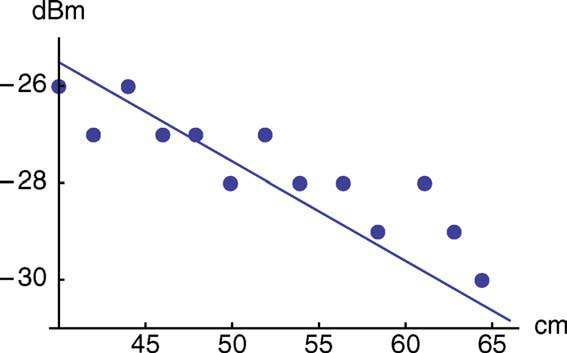
The study demonstrates that millimetre‑wave guided modes—known as Sommerfeld waves—can be efficiently launched and transported along simple metallic wires at 100 GHz and 300 GHz. By inserting a straightforward differential phase plate in front of the wire, the researchers achieved a theoretical…

Study of blood plasma optical properties in mice grafted with Ehrlich carcinoma in the frequency range 0.1–1.0 THz

Research figure associated with Study of blood plasma optical properties in mice grafted with Ehrlich carcinoma in the frequency range 0.1–1.0 THz

The study demonstrates that terahertz (THz) time‑domain spectroscopy can detect measurable changes in the optical properties of blood plasma from mice bearing Ehrlich carcinoma, offering a rapid, non‑invasive diagnostic approach for oncological disease. By measuring the refractive index and…

Pilot study of freshly excised breast tissue response in the 300 – 600 GHz range

Research figure associated with Terahertz refractive index-based morphological dilation for breast carcinoma delineation

The pilot research demonstrates that terahertz (THz) imaging in the 300‑600 GHz band can reliably distinguish between malignant and healthy breast tissues within freshly excised specimens. Because the refractive index of cancerous tissue mixtures is measurably higher than that of fat or normal…

A comprehensive study of the application of the EOP techniques on bipolar devices

Research figure associated with Room temperature thermopile THz sensor

The study demonstrates that Electro‑Optical Probing (EOP), a non‑invasive laser‑based diagnostic technique, can be reliably applied to bipolar semiconductor devices to uncover internal electrical activity and identify failure mechanisms that are otherwise invisible to conventional analysis. By…

Multimodal Optical Diagnostics of Glycated Biological Tissues

Research figure associated with Study of blood plasma optical properties in mice grafted with Ehrlich carcinoma in the frequency range 0.1–1.0 THz

An in-depth editorial guide to Multimodal Optical Diagnostics of Glycated Biological Tissues, its scientific context, terahertz contribution, applications, and collaboration potential in Biomedical Imaging.

Room temperature thermopile THz sensor

Research figure associated with Room temperature thermopile THz sensor

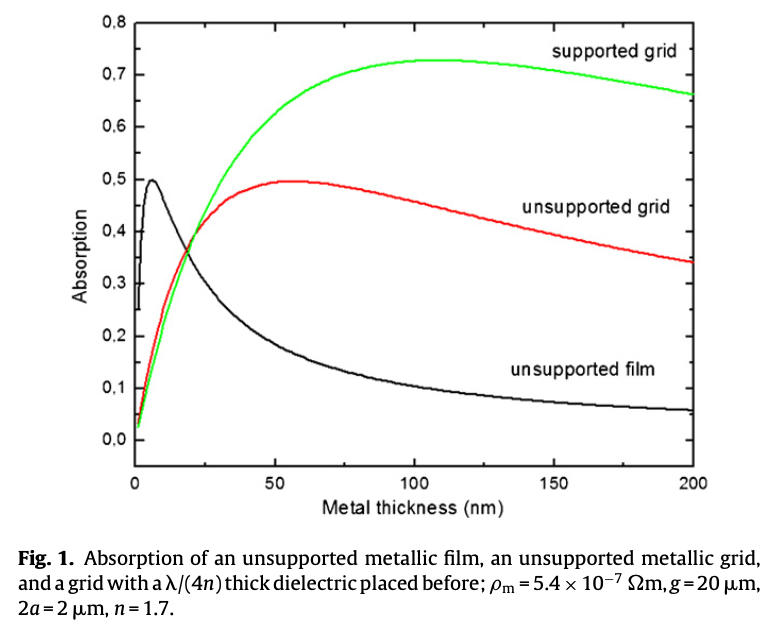
Executive Summary The research presented here delivers a novel room‑temperature terahertz (THz) sensor that converts incident electromagnetic power into a measurable electrical signal via a thermopile assembled on a micro‑fabricated silicon dioxide membrane. By using a metallic grid absorber…

Room temperature Si–Ti thermopile THz sensor

Research figure associated with Room temperature thermopile THz sensor

The work presents a room‑temperature terahertz (THz) detector based on a thermopile that converts absorbed THz radiation into a measurable voltage. The sensor’s absorber is a metallic grid engineered through a multilayer theoretical model that accounts for diffraction and equivalent resistivity,…

NearSense – Advances Towards a Silicon-Based Terahertz Near-Field Imaging Sensor for Ex Vivo Breast Tumour Identification

Research figure associated with Terahertz refractive index-based morphological dilation for breast carcinoma delineation

An in-depth editorial guide to NearSense – Advances Towards a Silicon-Based Terahertz Near-Field Imaging Sensor for Ex Vivo Breast Tumour Identification, its scientific context, terahertz contribution, applications, and collaboration potential in Biomedical Imaging.

Ex Vivo Breast Tumor Identification: Advances Toward a Silicon-Based Terahertz Near-Field Imaging Sensor

Research figure associated with Terahertz refractive index-based morphological dilation for breast carcinoma delineation

An in-depth editorial guide to Ex Vivo Breast Tumor Identification: Advances Toward a Silicon-Based Terahertz Near-Field Imaging Sensor, its scientific context, terahertz contribution, applications, and collaboration potential in Biomedical Imaging.

Terahertz refractive index-based morphological dilation for breast carcinoma delineation

Research figure associated with Terahertz refractive index-based morphological dilation for breast carcinoma delineation

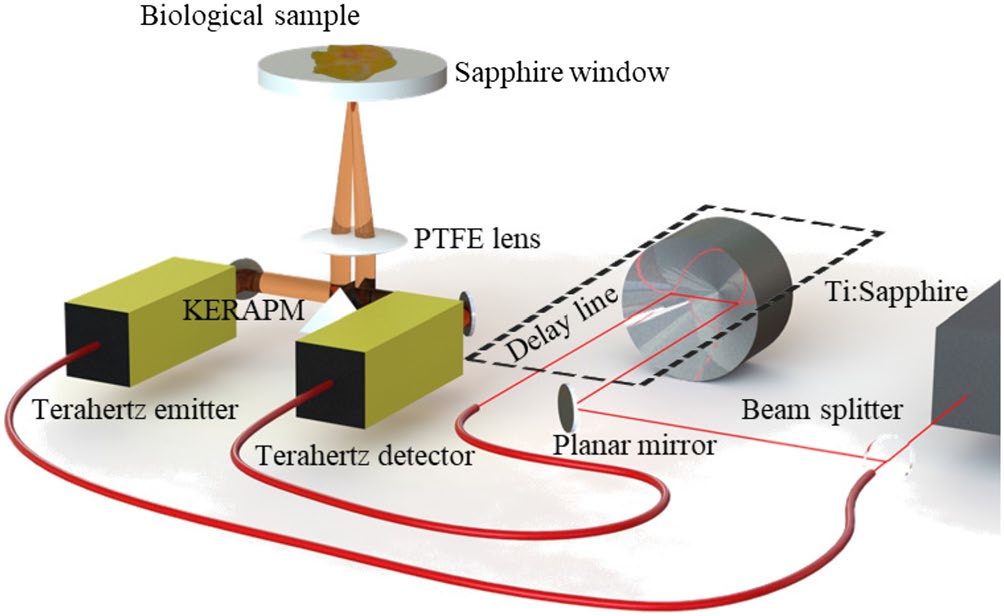
Terahertz time‑domain imaging has been harnessed to generate refractive‑index maps of freshly excised breast tissue, enabling a non‑ionising, optical‑based assessment of tumour margins during breast‑conserving surgery. By converting the refractive‑index distribution into a binary map and then…

Reconfigurable and versatile augmented reality optical setup for tangible experimentations

Terahertz research image associated with Reconfigurable and versatile augmented reality optical setup for tangible experimentations

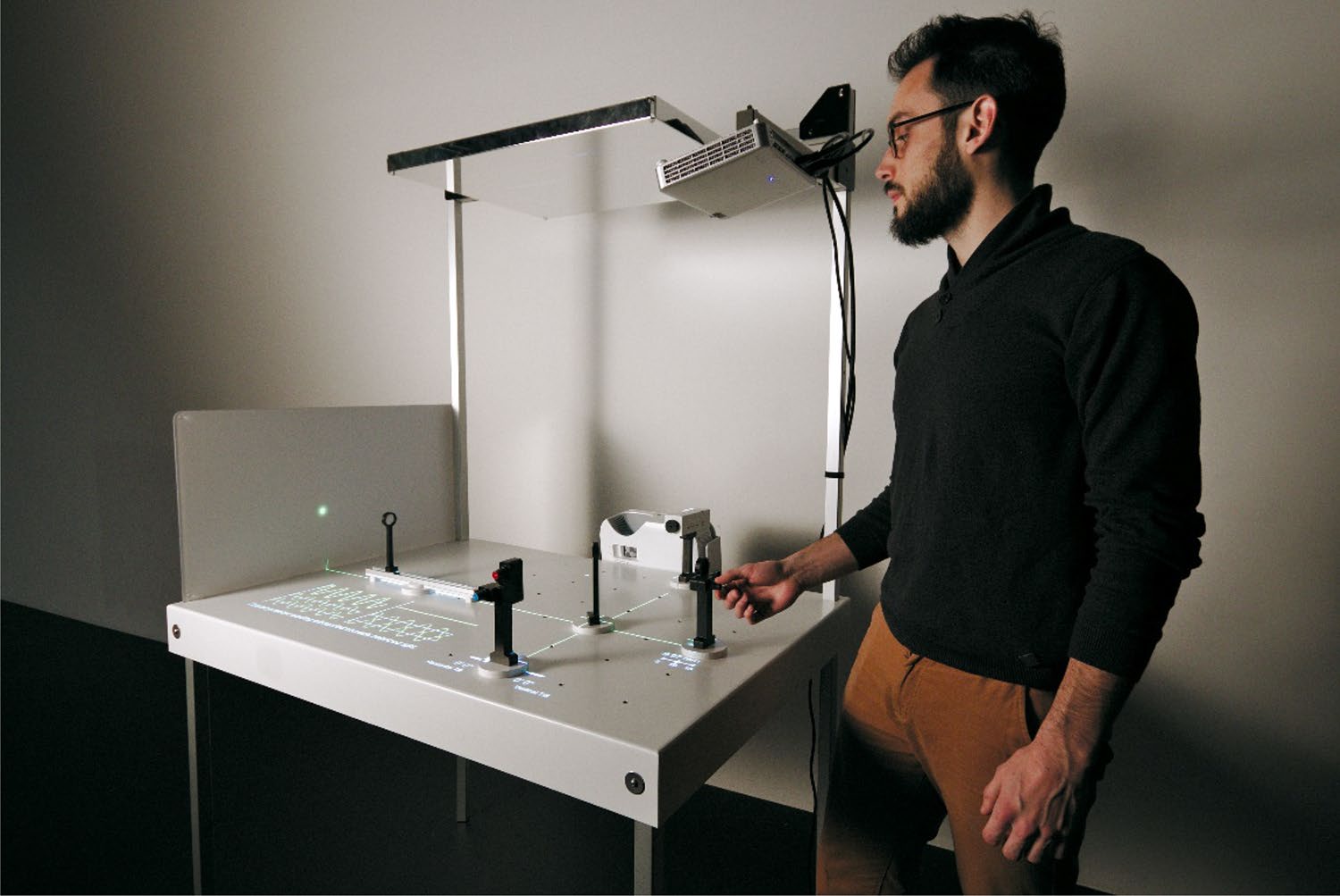
Hybrid Optical Bench for Innovative Teaching and learning (HOBIT) combines a physical optical table with a real‑time, self‑adaptive digital simulation and augmented‑reality overlays. The system enables any optical experiment to be assembled, adjusted, and observed in a single secure,…

Durabilité des ressources pédagogiques sur support mobile en génie électrique

Research figure associated with Durabilité des ressources pédagogiques sur support mobile en génie électrique

An in-depth editorial guide to Durabilité des ressources pédagogiques sur support mobile en génie électrique, its scientific context, terahertz contribution, applications, and collaboration potential in Non-Destructive Testing.

SubTHz Fully-Metallic Geodesic Luneburg Lens Antenna

Research figure associated with SubTHz Fully-Metallic Geodesic Luneburg Lens Antenna

Executive Summary A team of researchers from KTH Royal Institute of Technology, INSA Rennes, the University of Bordeaux, and ESA has developed and experimentally validated a fully metallic geodesic Luneburg lens antenna that operates in the sub‑terahertz (sub‑THz) frequency band between 128 and 132…

Exit mobile version