FMCW radar transmits a continuously swept frequency and measures the beat signal produced by delayed reflections, enabling distance, thickness, and depth-resolved imaging with compact coherent hardware. In this article, I explain how I use this concept in terahertzTerahertz radiation is electromagnetic energy commonly associated with frequencies around 0.1 to 10 THz, between microwaves and infrared, where many materials reveal distinctive propagation, absorption, and imaging behavior. More science, instrumentation, measurement, or interpretation.
Physical meaning in the terahertz domain
I use fmcw radar to describe measurable behavior in the terahertzTerahertz radiation is electromagnetic energy commonly associated with frequencies around 0.1 to 10 THz, between microwaves and infrared, where many materials reveal distinctive propagation, absorption, and imaging behavior. More band rather than a general scientific abstraction. TerahertzTerahertz radiation is electromagnetic energy commonly associated with frequencies around 0.1 to 10 THz, between microwaves and infrared, where many materials reveal distinctive propagation, absorption, and imaging behavior. More and sub-terahertz FMCW radar convert a controlled frequency chirp into beat frequencies associated with propagation delay. The method can resolve interfaces and thickness, but chirp linearity, phase stability, coupling, and calibration directly set depth accuracy. I therefore identify whether the relevant information is carried by electric-field timing, complex spectral amplitude, emitted power, propagation loss, polarization, spatial contrast, or a fitted material parameter. I keep that distinction explicit because two instruments can use the same term while observing it through different hardware and calibration procedures.
I compare fmcw radar with TerahertzTerahertz radiation is electromagnetic energy commonly associated with frequencies around 0.1 to 10 THz, between microwaves and infrared, where many materials reveal distinctive propagation, absorption, and imaging behavior. More radar, Beat-frequency ranging in terahertzTerahertz radiation is electromagnetic energy commonly associated with frequencies around 0.1 to 10 THz, between microwaves and infrared, where many materials reveal distinctive propagation, absorption, and imaging behavior. More FMCW radar, Range resolution in terahertzTerahertz radiation is electromagnetic energy commonly associated with frequencies around 0.1 to 10 THz, between microwaves and infrared, where many materials reveal distinctive propagation, absorption, and imaging behavior. More FMCW radar according to the information I need from the sample. I may use a broadband pulsed system to combine time delay and spectroscopy, a continuous-wave system for selective coherent phase measurements, or FMCW radar to translate a frequency sweep into range information. I use near-field techniques when local resolution justifies a short working distance, while far-field imaging is easier to deploy over larger areas. I choose the method that best matches sample access, attenuation, feature size, acquisition time, and the uncertainty acceptable for the intended decision.
When I use fmcw radar, I assess limitations arising from both the sample and the instrument. I watch particularly for metal screening, strong water absorption, weak dielectric contrast, calibration drift, and model non-uniqueness. I use processing to reduce selected artifacts, but I do not expect it to recover information that was never measured; aggressive filtering can remove weak interfaces or create false structure. I therefore retain raw data, calibration records, processing parameters, and failed or low-confidence regions instead of reducing the experiment to a single color map.
In this glossary, I use fmcw radar as part of the practical vocabulary of fmcw radar. TerahertzTerahertz radiation is electromagnetic energy commonly associated with frequencies around 0.1 to 10 THz, between microwaves and infrared, where many materials reveal distinctive propagation, absorption, and imaging behavior. More and sub-terahertz FMCW radar convert a controlled frequency chirp into beat frequencies associated with propagation delay. The method can resolve interfaces and thickness, but chirp linearity, phase stability, coupling, and calibration directly set depth accuracy. I therefore place the term inside a complete terahertzTerahertz radiation is electromagnetic energy commonly associated with frequencies around 0.1 to 10 THz, between microwaves and infrared, where many materials reveal distinctive propagation, absorption, and imaging behavior. More measurement chain rather than treating it as an isolated concept. I consider what the instrument emits, what the sample modifies, what the detector records, and which processing steps I apply before presenting a result.
When I measure fmcw radar, I report the underlying observable, such as electric-field amplitude and phase, pulse arrival time, transmitted power, reflected power, or a beat frequency, before presenting a derived conclusion. I usually work with a usable frequency range narrower than the nominal bandwidth because source power, detector sensitivity, atmospheric absorption, and sample loss vary strongly with frequency. In my uncertainty analysis, I include repeatability, reference choice, sample positioning, thickness knowledge, phase treatment, and any model used to convert the recorded signal into a material, distance, or classification result.
How it appears in an experiment
When I implement fmcw radar, I begin with the measurement question rather than a default instrument configuration. I use broadband THz-TDS when I need direct timing and complex spectral information, while continuous-wave or FMCW arrangements emphasize narrowband phase, coherent ranging, or compact implementation. I record the reference under comparable conditions, including beam path, humidity, polarization, focus, sample position, and detector settings. I repeat acquisitions and inspect raw waveforms or spectra before accepting a visually convincing image or fitted number as a stable sample response.
I use evidence obtained with fmcw radar to support statements about electromagnetic contrast, timing, attenuation, spectral response, or spatial structure. I do not treat that evidence alone as proof of a unique chemical composition, defect mechanism, tissue state, or historical intervention. I consider alternative causes such as thickness, water content, refractive index, scattering, surface angle, focus, polarization, or an unresolved interface. For a stronger interpretation, I use an appropriate physical model, comparison samples, repeated measurements, and, where possible, an independent method sensitive to a different material property.
For fmcw radar, I separate the instrument chain into emitter or transmitter, propagation path, coupling geometry, receiver, calibration reference, and reconstruction. I account for the bandwidth, phase delay, loss, noise, and possible reflections introduced at each stage. I use calibration to prevent those contributions from being mistaken for a property of the sample. For imaging, I keep the chain stable while position changes; for spectroscopy, I maintain comparable reference and sample states over the frequency interval used in the analysis.
I compare fmcw radar with TerahertzTerahertz radiation is electromagnetic energy commonly associated with frequencies around 0.1 to 10 THz, between microwaves and infrared, where many materials reveal distinctive propagation, absorption, and imaging behavior. More radar, Beat-frequency ranging in terahertzTerahertz radiation is electromagnetic energy commonly associated with frequencies around 0.1 to 10 THz, between microwaves and infrared, where many materials reveal distinctive propagation, absorption, and imaging behavior. More FMCW radar, Range resolution in terahertzTerahertz radiation is electromagnetic energy commonly associated with frequencies around 0.1 to 10 THz, between microwaves and infrared, where many materials reveal distinctive propagation, absorption, and imaging behavior. More FMCW radar according to the information I need from the sample. I may use a broadband pulsed system to combine time delay and spectroscopy, a continuous-wave system for selective coherent phase measurements, or FMCW radar to translate a frequency sweep into range information. I use near-field techniques when local resolution justifies a short working distance, while far-field imaging is easier to deploy over larger areas. I choose the method that best matches sample access, attenuation, feature size, acquisition time, and the uncertainty acceptable for the intended decision. At this stage of my analysis, I give particular attention to polarization control, which I document alongside the terahertzTerahertz radiation is electromagnetic energy commonly associated with frequencies around 0.1 to 10 THz, between microwaves and infrared, where many materials reveal distinctive propagation, absorption, and imaging behavior. More data before using fmcw radar to support a technical conclusion.
When I use fmcw radar, I assess limitations arising from both the sample and the instrument. I watch particularly for beam truncation, defocus, surface tilt, polarization mismatch, and spatial undersampling. I use processing to reduce selected artifacts, but I do not expect it to recover information that was never measured; aggressive filtering can remove weak interfaces or create false structure. I therefore retain raw data, calibration records, processing parameters, and failed or low-confidence regions instead of reducing the experiment to a single color map.
Measurement choices and interpretation
When I measure fmcw radar, I report the underlying observable, such as a time trace, complex spectrum, depth profile, radiometric signal, or hyperspectral image cube, before presenting a derived conclusion. I usually work with a usable frequency range narrower than the nominal bandwidth because source power, detector sensitivity, atmospheric absorption, and sample loss vary strongly with frequency. In my uncertainty analysis, I include repeatability, reference choice, sample positioning, thickness knowledge, phase treatment, and any model used to convert the recorded signal into a material, distance, or classification result.
When I implement fmcw radar, I begin with the measurement question rather than a default instrument configuration. I use broadband THz-TDS when I need direct timing and complex spectral information, while continuous-wave or FMCW arrangements emphasize narrowband phase, coherent ranging, or compact implementation. I record the reference under comparable conditions, including beam path, humidity, polarization, focus, sample position, and detector settings. I repeat acquisitions and inspect raw waveforms or spectra before accepting a visually convincing image or fitted number as a stable sample response. At this stage of my analysis, I give particular attention to thickness uncertainty, which I document alongside the terahertzTerahertz radiation is electromagnetic energy commonly associated with frequencies around 0.1 to 10 THz, between microwaves and infrared, where many materials reveal distinctive propagation, absorption, and imaging behavior. More data before using fmcw radar to support a technical conclusion.
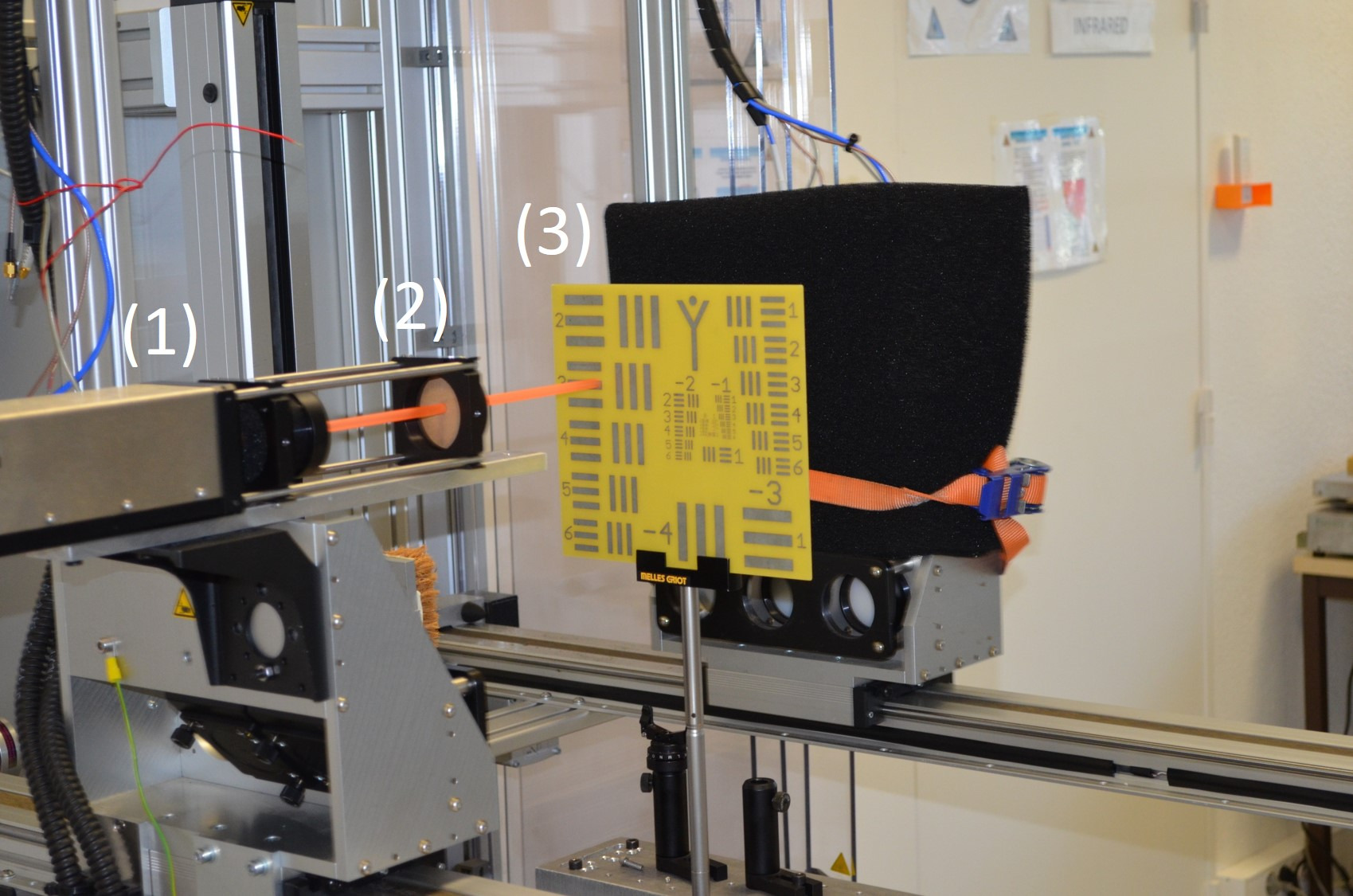
In the work I co-authored, âGuided Reflectometry Imaging Unit Using Millimeter Wave FMCW Radarsâ, we addressed a context in which fmcw radar is relevant to an instrument, an imaging problem, a sample, or a data-analysis method. I cite this publication as a concrete connection with my research, not as blanket evidence for every statement on this page. For the experimental configuration, numerical values, figure interpretation, and complete conclusions, I refer readers to the DOI or publication link. This distinction lets me connect the glossary to my publications while preserving the scope and wording of the original collective work.
When I measure fmcw radar, I report the underlying observable, such as a time trace, complex spectrum, depth profile, radiometric signal, or hyperspectral image cube, before presenting a derived conclusion. I usually work with a usable frequency range narrower than the nominal bandwidth because source power, detector sensitivity, atmospheric absorption, and sample loss vary strongly with frequency. In my uncertainty analysis, I include repeatability, reference choice, sample positioning, thickness knowledge, phase treatment, and any model used to convert the recorded signal into a material, distance, or classification result. At this stage of my analysis, I give particular attention to repeat measurements, which I document alongside the terahertzTerahertz radiation is electromagnetic energy commonly associated with frequencies around 0.1 to 10 THz, between microwaves and infrared, where many materials reveal distinctive propagation, absorption, and imaging behavior. More data before using fmcw radar to support a technical conclusion.
Limits and related concepts
When I use fmcw radar, I assess limitations arising from both the sample and the instrument. I watch particularly for beam truncation, defocus, surface tilt, polarization mismatch, and spatial undersampling. I use processing to reduce selected artifacts, but I do not expect it to recover information that was never measured; aggressive filtering can remove weak interfaces or create false structure. I therefore retain raw data, calibration records, processing parameters, and failed or low-confidence regions instead of reducing the experiment to a single color map. At this stage of my analysis, I give particular attention to comparison specimens, which I document alongside the terahertzTerahertz radiation is electromagnetic energy commonly associated with frequencies around 0.1 to 10 THz, between microwaves and infrared, where many materials reveal distinctive propagation, absorption, and imaging behavior. More data before using fmcw radar to support a technical conclusion.
In this glossary, I use fmcw radar as part of the practical vocabulary of fmcw radar. TerahertzTerahertz radiation is electromagnetic energy commonly associated with frequencies around 0.1 to 10 THz, between microwaves and infrared, where many materials reveal distinctive propagation, absorption, and imaging behavior. More and sub-terahertz FMCW radar convert a controlled frequency chirp into beat frequencies associated with propagation delay. The method can resolve interfaces and thickness, but chirp linearity, phase stability, coupling, and calibration directly set depth accuracy. I therefore place the term inside a complete terahertzTerahertz radiation is electromagnetic energy commonly associated with frequencies around 0.1 to 10 THz, between microwaves and infrared, where many materials reveal distinctive propagation, absorption, and imaging behavior. More measurement chain rather than treating it as an isolated concept. I consider what the instrument emits, what the sample modifies, what the detector records, and which processing steps I apply before presenting a result. At this stage of my analysis, I give particular attention to complementary evidence, which I document alongside the terahertzTerahertz radiation is electromagnetic energy commonly associated with frequencies around 0.1 to 10 THz, between microwaves and infrared, where many materials reveal distinctive propagation, absorption, and imaging behavior. More data before using fmcw radar to support a technical conclusion.
In a terahertzTerahertz radiation is electromagnetic energy commonly associated with frequencies around 0.1 to 10 THz, between microwaves and infrared, where many materials reveal distinctive propagation, absorption, and imaging behavior. More experiment, I do not treat fmcw radar as a label; I use it to identify a specific interaction between field, instrument, and sample. TerahertzTerahertz radiation is electromagnetic energy commonly associated with frequencies around 0.1 to 10 THz, between microwaves and infrared, where many materials reveal distinctive propagation, absorption, and imaging behavior. More and sub-terahertz FMCW radar convert a controlled frequency chirp into beat frequencies associated with propagation delay. The method can resolve interfaces and thickness, but chirp linearity, phase stability, coupling, and calibration directly set depth accuracy. I therefore identify whether the relevant information is carried by electric-field timing, complex spectral amplitude, emitted power, propagation loss, polarization, spatial contrast, or a fitted material parameter. I keep that distinction explicit because two instruments can use the same term while observing it through different hardware and calibration procedures.
When I measure fmcw radar, I report the underlying observable, such as a time trace, complex spectrum, depth profile, radiometric signal, or hyperspectral image cube, before presenting a derived conclusion. I usually work with a usable frequency range narrower than the nominal bandwidth because source power, detector sensitivity, atmospheric absorption, and sample loss vary strongly with frequency. In my uncertainty analysis, I include repeatability, reference choice, sample positioning, thickness knowledge, phase treatment, and any model used to convert the recorded signal into a material, distance, or classification result. I recommend reading the following adjacent concepts together: Terahertz radar, Beat-frequency ranging in terahertz FMCW radar, Range resolution in terahertz FMCW radar, Frequency-modulated continuous-wave radar, Terahertz FMCW radar chirp, and Chirp bandwidth in terahertz FMCW radar. I use these links to separate the physical quantity, the instrument that measures it, the processing applied to the data, and the application-level conclusion.