
Research publication · Broadband terahertzTerahertz radiation is electromagnetic energy commonly associated with frequencies around 0.1 to 10 THz, between microwaves and infrared, where many materials reveal distinctive propagation, absorption, and imaging behavior. More photomixing
Broadband THz emission of long pulses from photomixing process with optical chirped pulses
Photomixing normally presents a choice between duration and bandwidth. Two continuous or identically chirped optical fields can drive a photoconductive antenna at a well-defined difference frequency, producing a comparatively long but narrowband terahertzTerahertz radiation is electromagnetic energy commonly associated with frequencies around 0.1 to 10 THz, between microwaves and infrared, where many materials reveal distinctive propagation, absorption, and imaging behavior. More waveform. An ultrashort optical pulse can produce a broad spectrum, but the emitted burst is correspondingly brief and the high peak power complicates scaling. This paper explores a third regime by overlapping two long optical pulses whose instantaneous frequencies evolve with opposite slopes. Their difference frequency changes during the overlap, so the photoconductor emits a frequency-swept terahertzTerahertz radiation is electromagnetic energy commonly associated with frequencies around 0.1 to 10 THz, between microwaves and infrared, where many materials reveal distinctive propagation, absorption, and imaging behavior. More field.
The experiment produces a 12 ps terahertzTerahertz radiation is electromagnetic energy commonly associated with frequencies around 0.1 to 10 THz, between microwaves and infrared, where many materials reveal distinctive propagation, absorption, and imaging behavior. More pulse spanning approximately 1 THz, with a measured frequency ramp near 90 GHz per picosecond. The result connects long-pulse photomixing with broadband generation and creates a direct mapping between time and instantaneous terahertzTerahertz radiation is electromagnetic energy commonly associated with frequencies around 0.1 to 10 THz, between microwaves and infrared, where many materials reveal distinctive propagation, absorption, and imaging behavior. More frequency. That combination is of interest for ranging and spectroscopy, where a controlled sweep can encode distance or frequency-dependent response. The work is a source-physics demonstration, however: output saturation, antenna bandwidth and detection dynamic range still limit the usable field and spectral extent.
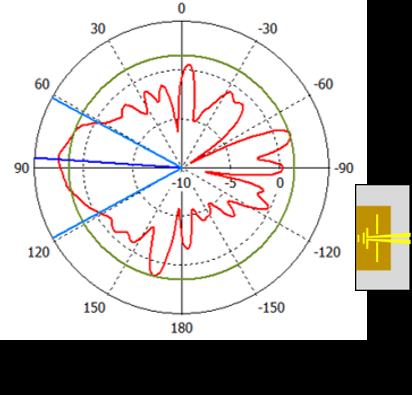
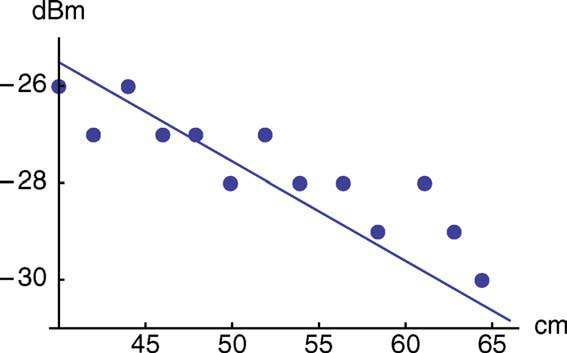
Featured visual: Contextual research figure from âGuided terahertzTerahertz radiation is electromagnetic energy commonly associated with frequencies around 0.1 to 10 THz, between microwaves and infrared, where many materials reveal distinctive propagation, absorption, and imaging behavior. More pulse reflectometry with double photoconductive antennaâ. It illustrates a closely related terahertzTerahertz radiation is electromagnetic energy commonly associated with frequencies around 0.1 to 10 THz, between microwaves and infrared, where many materials reveal distinctive propagation, absorption, and imaging behavior. More topic and is not a figure from the publication discussed on this page. Source publication.
Visuals are drawn from the Airtable research archive. Figure numbering, rights and interpretation should be checked against the original publication before republication outside this site.
Creating a moving beat frequency
The optical source is an ytterbium-fiber laser running at 76 MHz, with 70 fs pulses centred near 1028 nm. A volume Bragg grating applies an approximately linear chirp of 6.2 ps per nanometre and stretches the optical pulse to 93 ps full width at half maximum. A 10 nm band-pass filter constrains the available optical spectrum. A Michelson interferometer then forms two copies of the pulse and provides the relative delay needed for photomixing.
When both optical copies receive the same chirp, their instantaneous frequencies remain separated by a nearly constant difference. Overlap on the photoconductive antenna therefore generates a long, narrowband terahertzTerahertz radiation is electromagnetic energy commonly associated with frequencies around 0.1 to 10 THz, between microwaves and infrared, where many materials reveal distinctive propagation, absorption, and imaging behavior. More pulse whose frequency is selected by delay. The paper reports a duration around 54 ps in this configuration, with spectral width on the order of a few tens of gigahertz. This is the established chirped-pulse photomixing regime and provides the comparison against which the new arrangement is evaluated.
For broadband emission, the two pulses interact with opposite sides of the volume Bragg grating and acquire chirps of opposite sign. As one optical frequency increases in time, the other decreases, so their beat frequency evolves instead of remaining fixed. The transient carrier population in the GaBiAs photoconductive antenna follows this time-dependent beating and radiates a chirped terahertzTerahertz radiation is electromagnetic energy commonly associated with frequencies around 0.1 to 10 THz, between microwaves and infrared, where many materials reveal distinctive propagation, absorption, and imaging behavior. More waveform. The antenna is biased at 25 V in the reported measurements and illuminated with 15 mW for the waveform comparison. A time-frequency spectrogram, calculated with a moving 4 ps window, confirms a ramp close to 90 GHz/ps across the detected pulse.
Bandwidth gained at the cost of field amplitude
The opposite-chirp configuration yields the reported 12 ps waveform and approximately 1 THz spectrum. Its temporal structure is not equivalent to an ultrashort impulse: different frequency components appear at different times because the source itself sweeps. That property is potentially useful when subsequent processing can exploit the known chirp. The spectrum also contains weaker features associated with Fabry-Perot resonances in the antenna structure, separated by roughly 150 GHz, showing that the emitter and its substrate continue to shape the output beyond the optical beating law.
Measurements of photocurrent and terahertzTerahertz radiation is electromagnetic energy commonly associated with frequencies around 0.1 to 10 THz, between microwaves and infrared, where many materials reveal distinctive propagation, absorption, and imaging behavior. More field reveal an important limitation. At low excitation, the DC photocurrent increases approximately linearly with optical power and bias, as expected for the carrier generation and transport regime. The emitted peak-to-peak terahertzTerahertz radiation is electromagnetic energy commonly associated with frequencies around 0.1 to 10 THz, between microwaves and infrared, where many materials reveal distinctive propagation, absorption, and imaging behavior. More field saturates much sooner. At 25 V, the fitted saturation power is about 2.7 mW for opposite chirps, compared with 8.5 mW for identical chirps. Under the stated conditions, the broadband field is approximately four times weaker than the narrowband comparison even though their photocurrents are similar.
The authors associate that difference with the rapidly changing oscillation frequency of the carriers. In the broadband case, contributions produced at different times do not build coherently at one fixed frequency for the full optical envelope. Screening and transport effects further limit the field as optical power rises. Detection dynamic range makes the high-frequency edges difficult to observe, so the measured 1 THz extent may not capture every generated component. The optical filter and response of the photoconductive devices also bound the tunable range; changing the chirp alone cannot provide unlimited bandwidth.
Implications for integrated sources and ranging
A long optical drive reduces peak power relative to femtosecond excitation, which may ease power handling and distribution among several photomixers. Opposite chirps add broadband operation without abandoning that long-pulse architecture. For frequency-modulated ranging, a calibrated relation between emission time and frequency could support distance extraction in a way related to FMCW radarFMCW radar transmits a continuously swept frequency and measures the beat signal produced by delayed reflections, enabling distance, thickness, and depth-resolved imaging with compact coherent hardware. More, although a practical system would still need sufficient output power, coherent detection, linearity calibration and a treatment of dispersion through the full optical and terahertzTerahertz radiation is electromagnetic energy commonly associated with frequencies around 0.1 to 10 THz, between microwaves and infrared, where many materials reveal distinctive propagation, absorption, and imaging behavior. More chain.
Spectroscopy and imaging may also benefit when the time-frequency structure is matched to the sample and receiver. Yet the current experiment does not demonstrate a complete range measurement, material spectrum or array. The weaker field and early saturation must be improved or accommodated before system-level sensitivity can be judged. Antenna redesign, broader detection and optimized chirp profiles are plausible research directions, while comparisons with electronic FMCW sources and conventional pulsed time-domain systems would clarify where this method offers a practical advantage.
The author team combines ultrafast optics, photoconductive devices and terahertzTerahertz radiation is electromagnetic energy commonly associated with frequencies around 0.1 to 10 THz, between microwaves and infrared, where many materials reveal distinctive propagation, absorption, and imaging behavior. More instrumentation. That collaboration enables the key result: the optical waveform is engineered first, then traced through carrier dynamics to the measured terahertzTerahertz radiation is electromagnetic energy commonly associated with frequencies around 0.1 to 10 THz, between microwaves and infrared, where many materials reveal distinctive propagation, absorption, and imaging behavior. More field. The paper establishes a controllable generation principle and quantifies its present trade-off between bandwidth and amplitude, providing a realistic basis for further source integration rather than claiming a finished ranging platform.
Bibliographic reference
Recommended citation: Taton, G., Fauquet, F., Betka, I., Guillet, J.-P., Darracq, F., Mounaix, P., & Bigourd, D. (2025). Broadband THz emission of long pulses from photomixing process with optical chirped pulses. Optics Letters, 50(2), 650. https://doi.org/10.1364/OL.544220
Publisher: Optica Publishing Group. Airtable record: recXX0Y7MpHfbKMeB.