
Research publication · Probe-free terahertzTerahertz radiation is electromagnetic energy commonly associated with frequencies around 0.1 to 10 THz, between microwaves and infrared, where many materials reveal distinctive propagation, absorption, and imaging behavior. More near-field imaging
Scanning laser terahertzTerahertz radiation is electromagnetic energy commonly associated with frequencies around 0.1 to 10 THz, between microwaves and infrared, where many materials reveal distinctive propagation, absorption, and imaging behavior. More near-field reflection imaging system
Near-field terahertzTerahertz radiation is electromagnetic energy commonly associated with frequencies around 0.1 to 10 THz, between microwaves and infrared, where many materials reveal distinctive propagation, absorption, and imaging behavior. More imaging can beat the free-space diffraction limit, but many implementations rely on a tiny aperture or metallic tip that must be scanned close to the sample. Those probes restrict throughput and demand careful alignment. This study creates the localized terahertzTerahertz radiation is electromagnetic energy commonly associated with frequencies around 0.1 to 10 THz, between microwaves and infrared, where many materials reveal distinctive propagation, absorption, and imaging behavior. More source directly inside a thin gallium-arsenide crystal: a tightly focused femtosecond pump pulse generates radiation only near the illuminated point, and galvanometer mirrors move that point across a sample resting on the crystal. The reflected waveform is collected by a separate photoconductive detector. Tests on metal patterns demonstrate approximately 20 micrometer spatial response, while a paraffin-embedded breast-tissue section explores a biomedicalTerahertz and millimeter-wave technologies offer promising non-ionizing tools for biomedical tissue analysis, particularly for breast cancer research. Their sensitivity to water content, tissue structure, and dielectric contrast can help distinguish... More sample without establishing tissue diagnosis.
The architecture separates spatial resolution from the central terahertzTerahertz radiation is electromagnetic energy commonly associated with frequencies around 0.1 to 10 THz, between microwaves and infrared, where many materials reveal distinctive propagation, absorption, and imaging behavior. More wavelength. At roughly 440 GHz, the wavelength is about 680 micrometers, much larger than the pump focus. Because the sample interacts with the newly generated field before it diffracts far from the source region, image detail can follow the optical excitation spot and propagation inside the emitter. The price is close sample-crystal contact and a relatively small useful field, two constraints that matter when considering practical inspection.
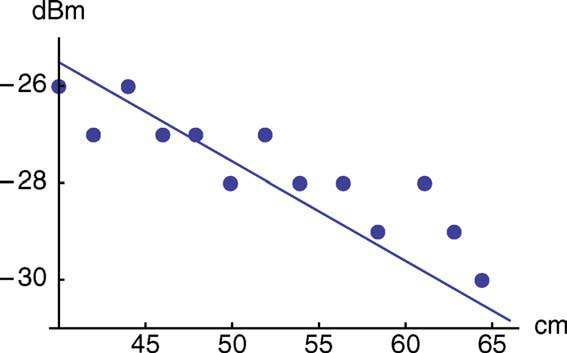
Featured visual: Contextual research figure from âContinuousâwave scanning terahertzTerahertz radiation is electromagnetic energy commonly associated with frequencies around 0.1 to 10 THz, between microwaves and infrared, where many materials reveal distinctive propagation, absorption, and imaging behavior. More nearâfield microscopeâ. It illustrates a closely related terahertzTerahertz radiation is electromagnetic energy commonly associated with frequencies around 0.1 to 10 THz, between microwaves and infrared, where many materials reveal distinctive propagation, absorption, and imaging behavior. More topic and is not a figure from the publication discussed on this page. Source publication.
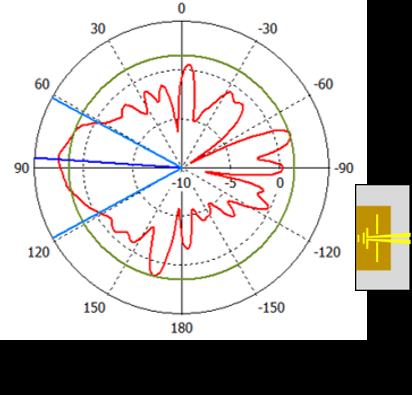
Visuals are drawn from the Airtable research archive. Figure numbering, rights and interpretation should be checked against the original publication before republication outside this site.
Scanning a localized emitter instead of a mechanical probe
A fiber laser delivered 100 fs pulses at 1.56 micrometers and an 80 MHz repetition rate. The beam was divided into pump and probe arms. In the pump path, the light was modulated and focused from the rear of a 500 micrometer thick (110) GaAs crystal. Optical rectification generated a pulsed terahertzTerahertz radiation is electromagnetic energy commonly associated with frequencies around 0.1 to 10 THz, between microwaves and infrared, where many materials reveal distinctive propagation, absorption, and imaging behavior. More field near a pump spot of approximately 10 micrometers at the sample-facing surface. The specimen was placed directly against that surface, allowing the field to interact with local structure before propagating back through the crystal.
Off-axis parabolic mirrors collected the reflected pulse and delivered it to a spiral low-temperature-grown GaAs photoconductive antenna. The probe arm was frequency converted to 780 nm to gate that detector, and an optical delay stage sampled the time-domain waveform. Two galvanometer mirrors moved the pump focus in X and Y, so the source position was scanned without translating the specimen. A photodiode recorded a simultaneous optical reflection image to register the trajectory.
Gold interdigitated patterns formed on the emitter provided a defined resolution target. At a detector delay of 4.04 ps, the reflection-amplitude image clearly separated gold from bare GaAs. A line profile across a 70 micrometer-period structure gave a full width at half maximum of about 20 micrometers, approximately one thirty-fourth of the stated terahertzTerahertz radiation is electromagnetic energy commonly associated with frequencies around 0.1 to 10 THz, between microwaves and infrared, where many materials reveal distinctive propagation, absorption, and imaging behavior. More wavelength. The remaining broadening was attributed in part to propagation and divergence within the 500 micrometer GaAs layer, suggesting that a thinner nonlinear crystal could further confine the response.
Angular scanning also introduced a radial reduction in measured amplitude. The authors acquired a reference map without a sample and fitted the illumination falloff using a cosine-fourth dependence. Dividing sample images by this reference corrected much of the distortion. After normalization, both the 70 micrometer pattern and amplitude variations associated with a 9 micrometer pattern were visible. Seeing the finer structure does not mean the system delivered a verified 9 micrometer point resolution; the measured line-spread value remained near 20 micrometers.
The acquisition rate was substantially faster than many point-probe near-field systems. A 128 by 128 pixel image required about 90 seconds, and a 512 by 512 image about ten minutes. The high-signal field was approximately 500 by 500 micrometers. Resonant scanning could increase speed, while detector arrays or a revised optical layout could enlarge coverage, but those extensions were proposed rather than demonstrated in the reported configuration.
Metal patterns, tissue sections and the meaning of contrast
For the biological example, the team imaged a 30 micrometer paraffin-embedded breast-tissue section carried on a 100 micrometer PET substrate. The time trace contained a first reflection at 4.04 ps from the GaAs-side interface and a later return at 6.32 ps after a double passage through the sample toward a PET-ITO reflector. Images selected at these two delays emphasized different interactions. The earlier image showed modest contrast and was sensitive to imperfect contact. The later image delineated the broad tissue-section shape more clearly.
The study did not find a clear correspondence between normal and lesion regions in this preliminary sample. Variations could arise from tissue, paraffin distribution, absorption, surface scattering or gaps at the crystal interface. Consequently, the experiment demonstrates that the system can image a thin biological section at micron-scale sampling, not that it identifies tumors. Frequency-resolved chemometric analysis, flatter interfaces, controlled substrates and comparison with registered histology would be required to test tissue differentiation.
For industrial inspection, the same constraints should be stated plainly. The metal targets establish spatial response on flat, well-coupled samples. Microelectronic structures or other devices may be compatible with this geometry, but roughness, topography and air gaps change near-field coupling. The present instrument is a laboratory prototype with a limited field and scanning time; no production-line qualification, repeatability study or defect-detection probability is reported.
The collaboration combines Japanese expertise in laser-driven terahertzTerahertz radiation is electromagnetic energy commonly associated with frequencies around 0.1 to 10 THz, between microwaves and infrared, where many materials reveal distinctive propagation, absorption, and imaging behavior. More generation with French work in imaging and breast-tissue spectroscopy. That partnership enabled the system to be evaluated beyond an ideal resolution chart while maintaining a cautious result for the tissue section. Future collaboration can use the platform to study how crystal thickness, sample contact, time-gated reflection and frequency-domain features affect a known target. Those controlled studies are a necessary bridge between high spatial resolution and reliable material interpretation.
The paper’s contribution is a compact, probe-free strategy for near-field reflection imaging. By scanning the optical pump rather than a fragile terahertzTerahertz radiation is electromagnetic energy commonly associated with frequencies around 0.1 to 10 THz, between microwaves and infrared, where many materials reveal distinctive propagation, absorption, and imaging behavior. More aperture, it achieves a measured response near 20 micrometers and practical image times for small fields. Its strongest evidence concerns instrumentation and metallic test patterns. The tissue experiment broadens the question and defines the next work, but remains an exploratory ex vivo measurement with no clinical claim.
Publication and citation
Recommended citation: Okada, K., Serita, K., Zang, Z., Murakami, H., Kawayama, I., Cassar, Q., Macgrogan, G., Guillet, J.-P., Mounaix, P., & Tonouchi, M. (2019). Scanning laser terahertzTerahertz radiation is electromagnetic energy commonly associated with frequencies around 0.1 to 10 THz, between microwaves and infrared, where many materials reveal distinctive propagation, absorption, and imaging behavior. More near-field reflection imaging system. Applied Physics Express, 12(12), 122005. https://doi.org/10.7567/1882-0786/ab4ddf
Publisher: IOP Publishing. Airtable record: recHVQLqwZkMiwK9v.